Stratospheric Aerosol Injection (SAI)
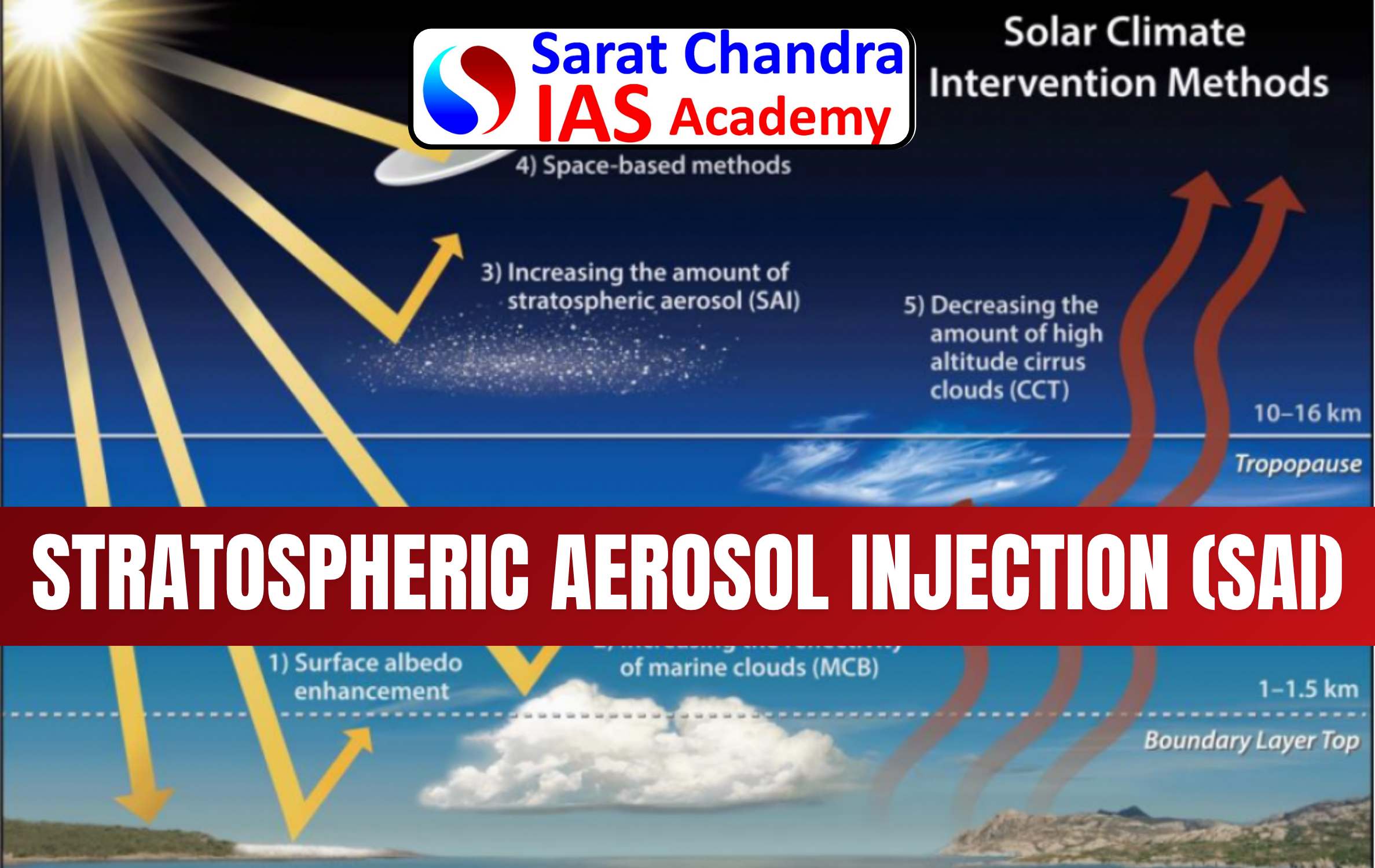
Context: A new study refines the feasibility of stratospheric aerosol injection (SAI), a controversial climate intervention inspired by volcanic eruptions, by exploring cost-effective, lower-altitude alternatives using modified commercial aircraft to temporarily cool the planet.
Important Pointers:
➤ Definition: SAI is a proposed solar geoengineering technique that involves injecting aerosols into the stratosphere (~20 km altitude) to reflect sunlight and cool the Earth.
➤ Inspiration: The idea is inspired by volcanic eruptions (e.g., Mount Pinatubo, 1991) that release sulphur dioxide, causing temporary global cooling.
➤ Objective: To reduce global temperatures and mitigate climate change impacts by creating a reflective aerosol layer in the high atmosphere.
➤ Recent Study (Earth’s Future Journal): Found that injecting 12 million tonnes of SO₂ annually at 13 km altitude during spring/summer could reduce global temperatures by 0.6°C.
➤ Comparison: For a 1°C cooling, the model estimated a need for 21 million tonnes of SO₂/year at 13 km, or just 7.6 million tonnes if sprayed at higher altitudes in subtropics.
➤ Altitude Effectiveness: Higher altitude injection (above 18–20 km) is more effective, as particles stay longer in the stratosphere (months to years), while low-altitude particles are more likely to be washed out by rain.
➤ Aircraft Feasibility: High-altitude SAI needs special aircraft which are costly and could take a decade to develop. Low-altitude SAI in polar regions can be done with modified existing aircraft (e.g., Boeing 777F with insulated pressurized tanks).
➤ Geographical Variability: SAI at polar and extratropical regions is easier due to lower stratospheric boundaries, unlike equatorial regions where the tropopause lies higher.
➤ Controversy: SAI is highly controversial due to global spillover effects—actions by one country affect all; risks include acid rain, ozone depletion, geopolitical conflict, and climate complacency.