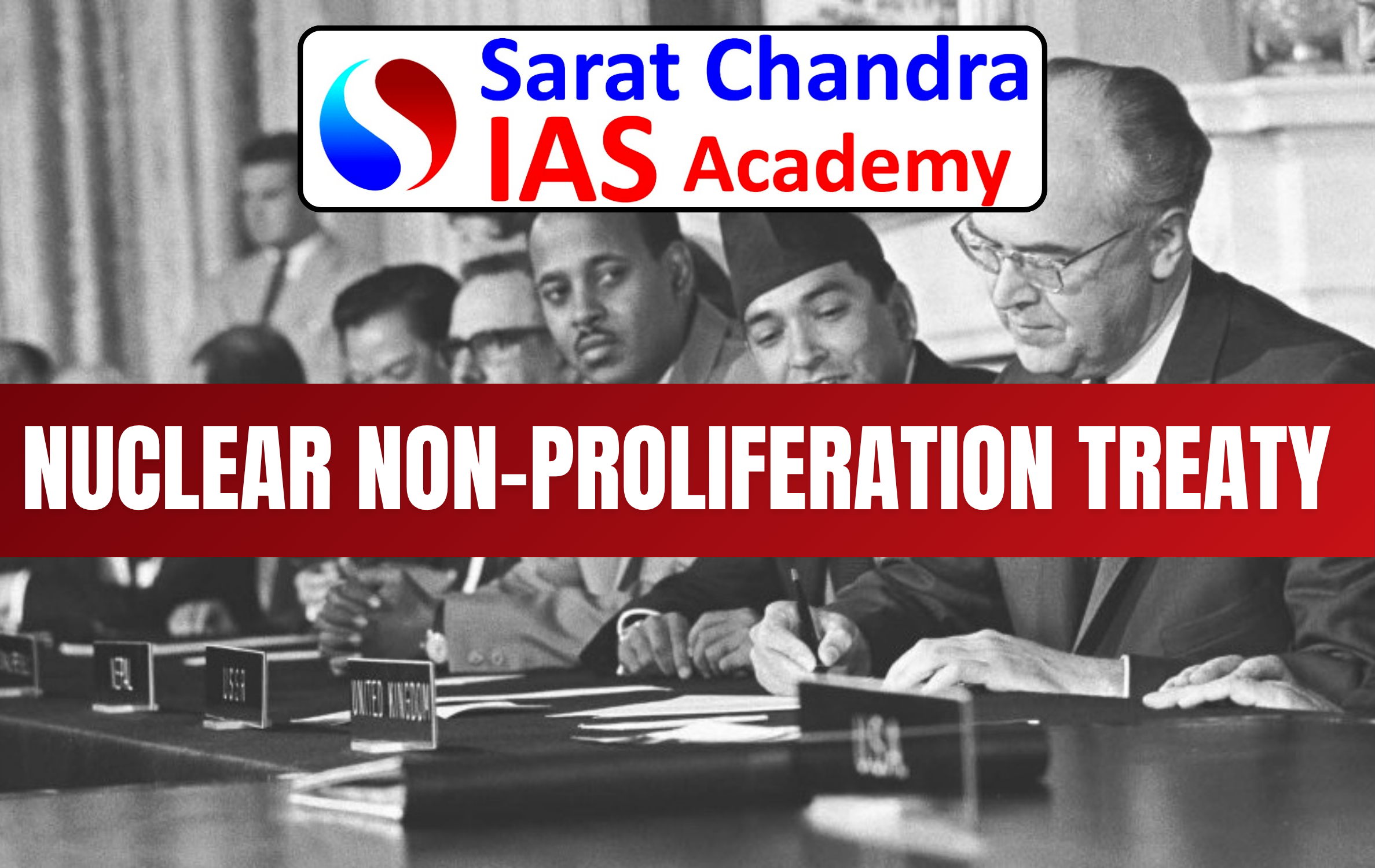
Nuclear Non-Proliferation Treaty
Why it Matters?
Amid escalating military tensions with Israel, the Islamic Republic of Iran’s Parliament is drafting a bill to potentially withdraw from the Treaty on the Non‑Proliferation of Nuclear Weapons (NPT), in response to recent Israeli airstrikes and a critical resolution from the International Atomic Energy Agency (IAEA) alleging Tehran breached its treaty obligations.
What You Should Know?
The Nuclear Non-Proliferation Treaty (NPT) was approved by the United Nations General Assembly on 12th June 1968 and came into force on 5th March 1970.
NPT is the only multilateral binding treaty that obligates Nuclear-Weapon States (NWS) to pursue disarmament while promoting peaceful uses of nuclear energy.
The treaty recognizes five Nuclear-Weapon States (NWS) as those possessing nuclear weapons before 1st January 1967. They are the United States, the United Kingdom, France, China, and the Union of Soviet Socialist Republics (now Russia).
Non-Nuclear-Weapon States (NNWS) agree not to develop or acquire nuclear weapons, while NWS agree not to transfer nuclear weapons or assist NNWS in acquiring them.
The treaty permits all members to develop nuclear energy for peaceful purposes under International Atomic Energy Agency (IAEA) safeguards.
Article X allows a member to withdraw from the treaty with three months’ notice if extraordinary events threaten its national interest.
The NPT has 191 signatories, including all United Nations members except India, Pakistan, and Israel.
The International Atomic Energy Agency (IAEA) is responsible for monitoring compliance with the treaty’s provisions.
India has not signed the NPT, calling it discriminatory for legitimizing nuclear weapons in the hands of five states while denying the same right to others.
India follows a "No First Use" (NFU) nuclear doctrine and remains committed to universal, non-discriminatory nuclear disarmament.