Kolhapuri Chappals
Why it Matters?
Prada’s recent showcasing of footwear resembling Kolhapuri chappals without acknowledging their Indian origin has sparked a debate on cultural appropriation in global fashion, echoing past controversies like the renaming of the traditional buta motif as “paisley” in the West.
What You Should Know?
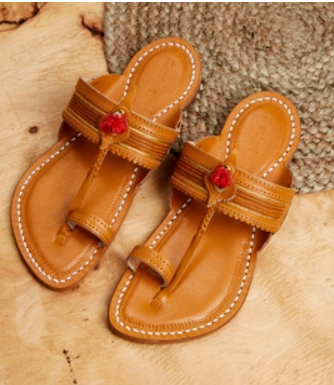
Kolhapuri chappals are traditional handcrafted leather footwear, primarily made in Kolhapur, Maharashtra, and parts of Karnataka.
These chappals are known for vegetable-tanned leather, braided toe loops, and indigenous stamped motifs like elephants and birds.
They received Geographical Indication (GI) status in 2019, recognising their regional and cultural identity.
As per the GI application, their origins date back to the 12th century, during the reign of King Bijjal of Bidar, and were encouraged by Vishwaguru Basavanna to uplift the cobbler community.
The term ‘Kolhapuri’ as a brand came into use in the early 20th century, when the footwear began trading through Kolhapur markets.
Chhatrapati Shahu Maharaj of Kolhapur supported the craft by establishing 29 tanning centres during his rule.
Kala mitti (black mud paste) is used to hold layers of leather; surface decoration is done using chaprega, hammers, and punches.
Each pair is dyed in natural or earthy colours like tan, mustard, and brown; newer variants include reds and blues to appeal to modern aesthetics.
Despite international demand, artisans often face market resistance due to the hard sole and lack of immediate comfort; newer versions now offer cushioned soles and ergonomic footbeds.
Note: GI TAG