International Monetary Fund (IMF)
Context: Despite strong reservations expressed by India against the disbursal of a $1 billion loan facility to Pakistan, the International Monetary Fund (IMF) approved the bailout package.
Important Pointers:
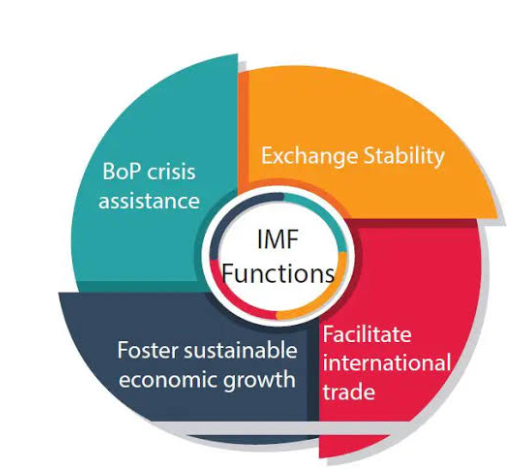
► Establishment: Created in 1944 at the Bretton Woods Conference; formally came into existence in 1945. ► Headquarters: Washington, D.C., USA. ► Membership: 190 countries (as of 2024). ► Main Objective: Ensure global monetary cooperation, secure financial stability, facilitate international trade, promote high employment and sustainable economic growth, and reduce poverty. ► Quota System: Members' voting power and financial contributions are based on quotas reflecting their economic size. ► India’s Quota: Approx. 2.75% of the total IMF quota; India has significant voting power among emerging economies. ► Lending Mechanisms: Includes Stand-By Arrangements (SBAs), Extended Fund Facility (EFF), and Rapid Financing Instrument (RFI). ► Special Drawing Rights (SDRs): IMF’s unit of account; members can exchange SDRs for freely usable currencies. ► Reports Published: World Economic Outlook, Global Financial Stability Report, Fiscal Monitor. ► Difference from World Bank: IMF provides short- to medium-term financial support and monitors macroeconomic stability, while the World Bank focuses on long-term development projects.