Blue Dragons
Why it Matters?
Blue dragons (Glaucus atlanticus) recently washed ashore in Spain, forcing beach closures. Scientists link their Mediterranean arrival to rising sea temperatures and shifting prey patterns, highlighting climate change impacts.
What You Should Know?
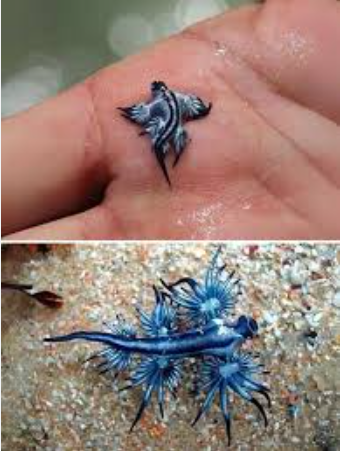
Blue dragons (Glaucus atlanticus) are small sea slugs, about 4 cm long.
They float upside down on the ocean surface using an air bubble.
Their blue-and-white body provides camouflage from predators.
They feed on venomous jellyfish like the Portuguese man o’ war.
Blue dragons store stinging cells, making their sting powerful.
Their sting causes pain, swelling, nausea, and vomiting in humans but is not fatal.
They are usually found in tropical waters of the Pacific, Atlantic, and Indian oceans.
Recently, they appeared in the Mediterranean, linked to rising sea temperatures.