UPSC Is Won Outside the Classroom: Why Self-Study Matters
An aspirant once told me that he had completed the entire Polity syllabus through online lectures. Yet, across four attempts, he had never read M. Laxmikanth—the standard book that generations of UPSC aspirants use to build and revise their foundations. His experience points to a common trap in civil services preparation: confusing exposure to a subject with mastery of it.
Classes can give direction, explain difficult concepts and save time. But attending a lecture is only the beginning. The deeper work—reading, connecting ideas, revising, testing and reflecting—usually happens after the class ends.
The mistake: confusing listening with learning
A lecture can make a topic feel familiar because the teacher has already organised the information and explained the difficult parts. That clarity is valuable, but it can create an illusion: because an explanation made sense while we listened, we assume we can recall, apply and analyse it independently.
Recognition is not the same as recall, and recall is not the same as application. You truly know a topic only when you can explain it without prompts, connect it with other parts of the syllabus, use it to assess a new issue and retrieve it under examination pressure.
Why UPSC demands more than recall
The Civil Services Examination does not merely reward the reproduction of classroom notes. Prelims tests conceptual distinctions and elimination under uncertainty. Mains asks candidates to interpret the demand, select relevant dimensions, exercise judgment and present a balanced answer within strict limits. The interview tests awareness, composure and the ability to reason aloud.
These abilities grow through active engagement. Aspirants must question an argument, compare perspectives, relate static concepts to current affairs and decide what matters. No teacher can perform that mental work on a student’s behalf.
What a classroom can—and cannot—do
Good coaching provides structure. It can map the syllabus, introduce reliable sources, explain concepts, identify recurring mistakes and create accountability. For beginners, this support can prevent months of unfocused effort.
But every classroom has limits. Teaching time is finite, students enter with different foundations, and a lecture must move at a shared pace. Coverage can introduce the dimensions of an issue, but it cannot replace the hours each aspirant needs to spend reading slowly, revisiting weak areas and building a personal understanding.
Use coaching as a support system, not as a substitute for self-study.
The five-stage learning cycle
A useful way to think about UPSC learning is as a sequence:
Lectures introduce a topic and provide an initial map.
Books deepen the topic, add nuance and expose you to precise language.
Revision strengthens memory and reveals gaps that were invisible during the first reading.
Practice tests validate whether you can retrieve and apply what you studied.
Reflection transforms information into understanding by asking why you made a mistake and how ideas connect.
Skipping any stage weakens the next one. Watching more lectures cannot compensate for weak revision; collecting more notes cannot compensate for avoiding questions; and taking tests without analysing them simply repeats the same errors.
A lesson from five aspirants
During the preparation for CSE Prelims 2026, five students from an integrated degree-and-UPSC programme joined my mentorship. Four also re-enrolled in classroom coaching. The fifth chose to concentrate on standard books, notes, questions and self-study. That student cleared the examination; the other four did not.
One small group cannot prove that coaching is ineffective, and it would be wrong to treat this anecdote as statistical evidence. Many factors influence an examination result. The useful lesson is narrower: additional classes do not automatically translate into additional learning. The deciding factor is often what an aspirant does with the remaining hours.
A practical routine after every class
Instead of moving immediately to the next lecture, close the learning loop. A simple post-class routine can make every hour of teaching more productive:
Recall before rereading: write the main ideas from memory in five to ten minutes.
Read the relevant standard source and mark only what clarifies, corrects or extends your understanding.
Connect the topic with one current-affairs issue and one other part of the syllabus.
Frame a few Prelims statements or one Mains question from the topic.
Attempt the question before checking your notes or model answers.
Maintain a short error log covering facts, concepts, interpretation and time management.
Schedule spaced revision instead of waiting for the final months.
The routine does not need to be elaborate. Consistency matters more than creating perfect notes. The aim is to make your brain retrieve, organise and apply the material rather than merely recognise it on a screen.
Do not avoid difficult books
Many aspirants abandon a standard book because the first reading feels slow or confusing. That discomfort is not evidence that the book is unsuitable; it is often the beginning of real learning. Read a difficult section more than once, break it into smaller parts and identify the exact concept you do not understand.
After making a genuine attempt, seek clarification from a teacher, mentor, reliable video or AI tool. Help is most useful when it resolves a specific gap. If it replaces the initial struggle every time, dependency grows and the ability to reason independently remains weak.
How to know whether your self-study is working
Measure learning through outputs rather than hours watched. Ask yourself:
Can I explain the concept in plain language without opening my notes?
Can I distinguish it from a similar concept in a tricky Prelims question?
Can I produce a balanced Mains outline in a few minutes?
Can I connect it with a recent event, constitutional provision, committee or case study?
Can I identify why my previous answer or test response was weak?
If the answer is repeatedly no, another lecture may not be the first solution. Return to the source, revise actively and practise a question. Use mentorship to diagnose the problem, then do the corrective work yourself.
The real work begins when the class ends
Classes remain important, especially when you are building a foundation or need guidance through a vast syllabus. But UPSC is eventually a test of judgment and independent thinking. Those qualities are developed in the quiet hours spent reading, questioning, revising, solving and reflecting.
Do not ask only, “How many lectures did I complete this week?” Ask, “What can I now understand, recall and apply without assistance?” That shift—from consuming instruction to producing understanding—is where serious preparation begins.
About Ajay Gupta
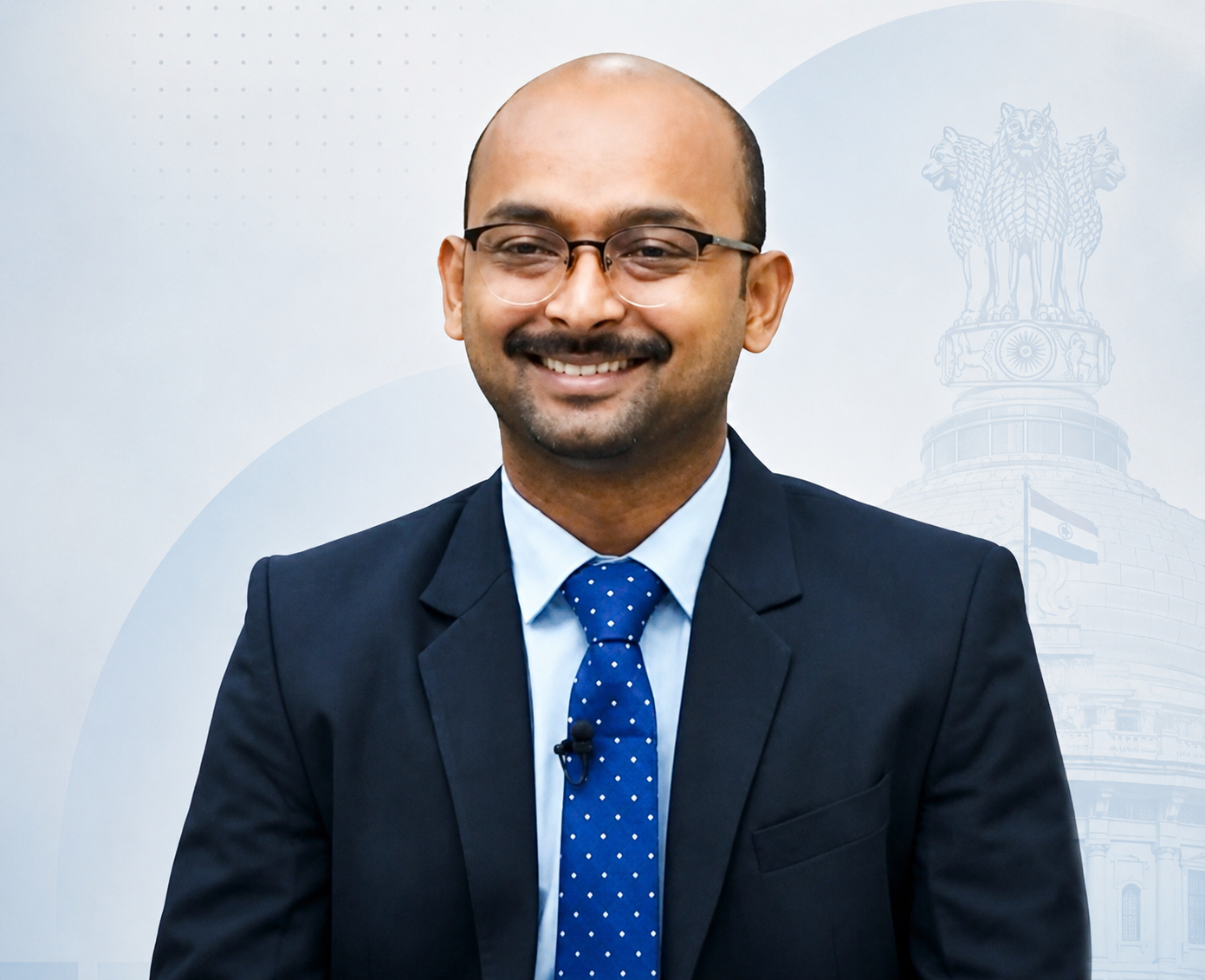
Ajay Gupta is a UPSC faculty member and mentor. He secured AIR 452 in UPSC CSE 2025 and AIR 91 in UPSC Indian Forest Service 2025. He has written four Mains examinations, attended three interviews, worked previously as a development professional and mentored more than 1,000 aspirants.
Explore UPSC coaching in Hyderabad for structured guidance designed to work alongside disciplined self-study.